Open source RGB lighting control that doesn't depend on manufacturer software


One of the biggest complaints about RGB is the software ecosystem surrounding it. Every manufacturer has their own app, their own brand, their own style. If you want to mix and match devices, you end up with a ton of conflicting, functionally identical apps competing for your background resources. On top of that, these apps are proprietary and Windows-only. Some even require online accounts. What if there was a way to control all of your RGB devices from a single app, on both Windows and Linux, without any nonsense? That is what OpenRGB sets out to achieve. One app to rule them all.


Version 1.0rc2, additional downloads and versions on Releases page

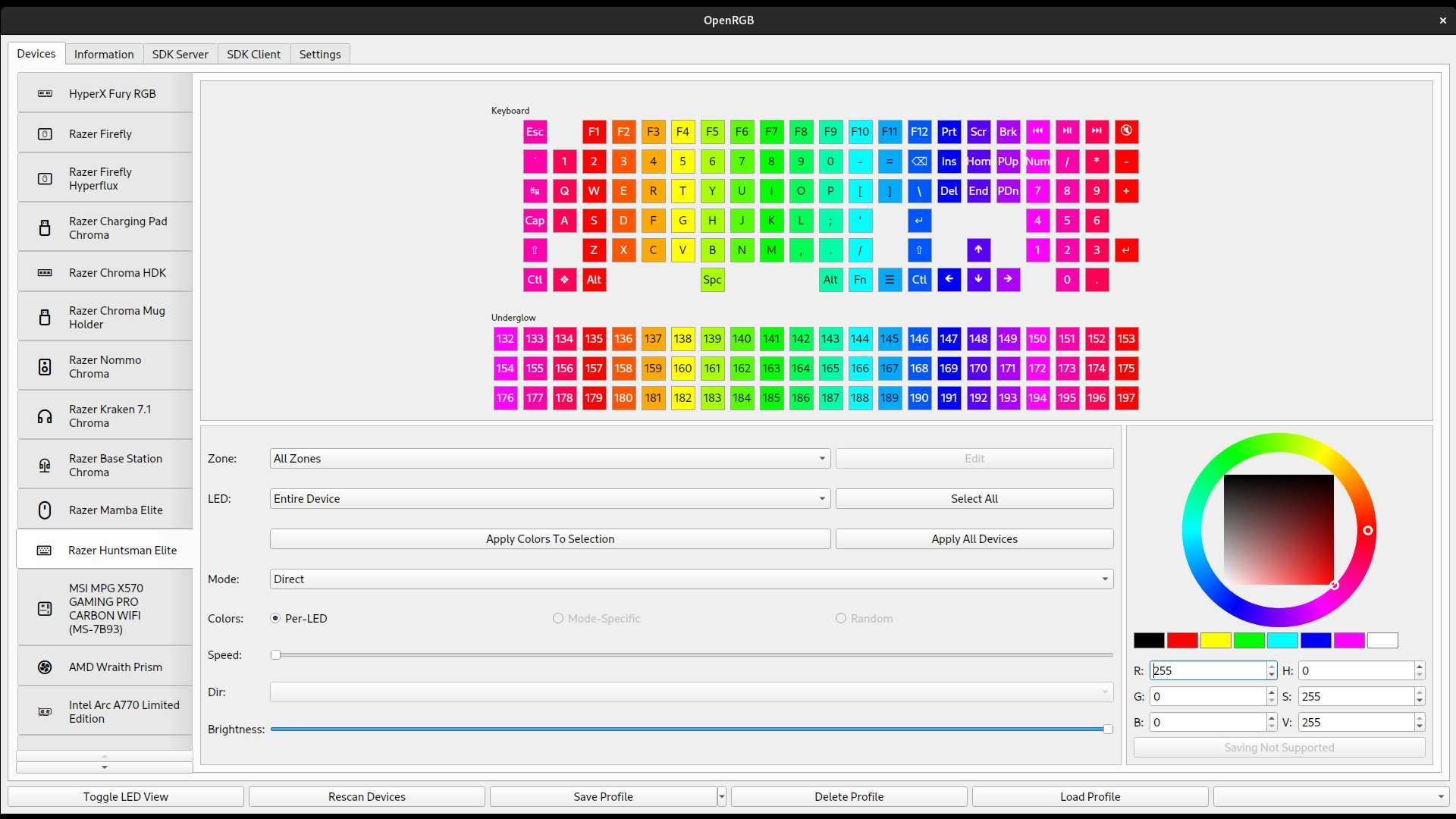
OpenRGB user interface

Control RGB without wasting system resources

Lightweight User Interface

OpenRGB keeps it simple with a lightweight user interface that doesn't waste background resources with excessive custom images and styles. It is light on both RAM and CPU usage, so your system can continue to shine without cutting into your gaming or productivity performance.
OpenRGB rules them all

Control RGB from a single app

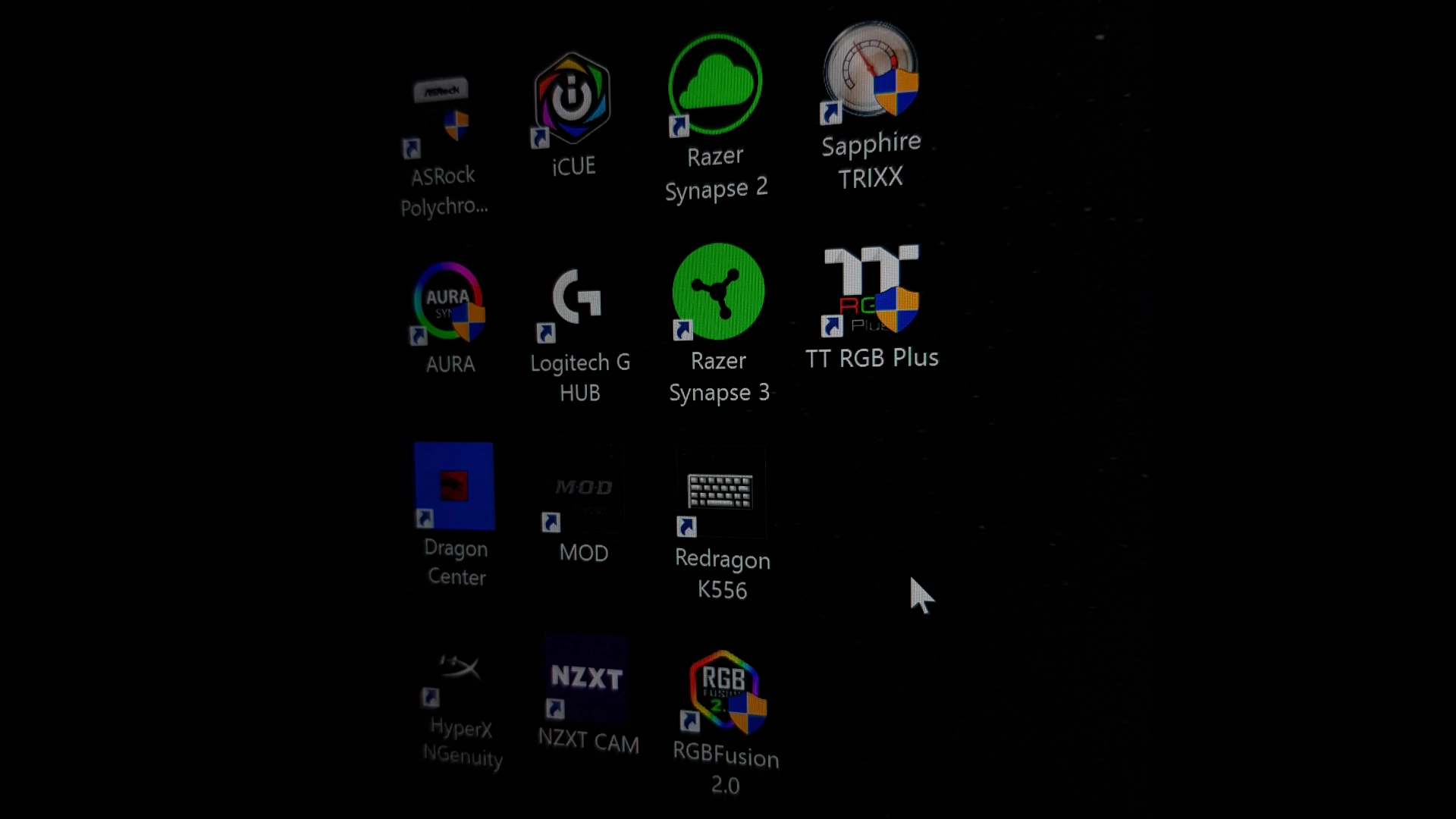
Eliminate Bloatware

If you have RGB devices from many different manufacturers, you will likely have many different programs installed to control all of your devices. These programs do not sync with each other, and they all compete for your system resources. OpenRGB aims to replace every single piece of proprietary RGB software with one lightweight app.

OpenRGB is open source software

Contribute your RGB devices

Open Source

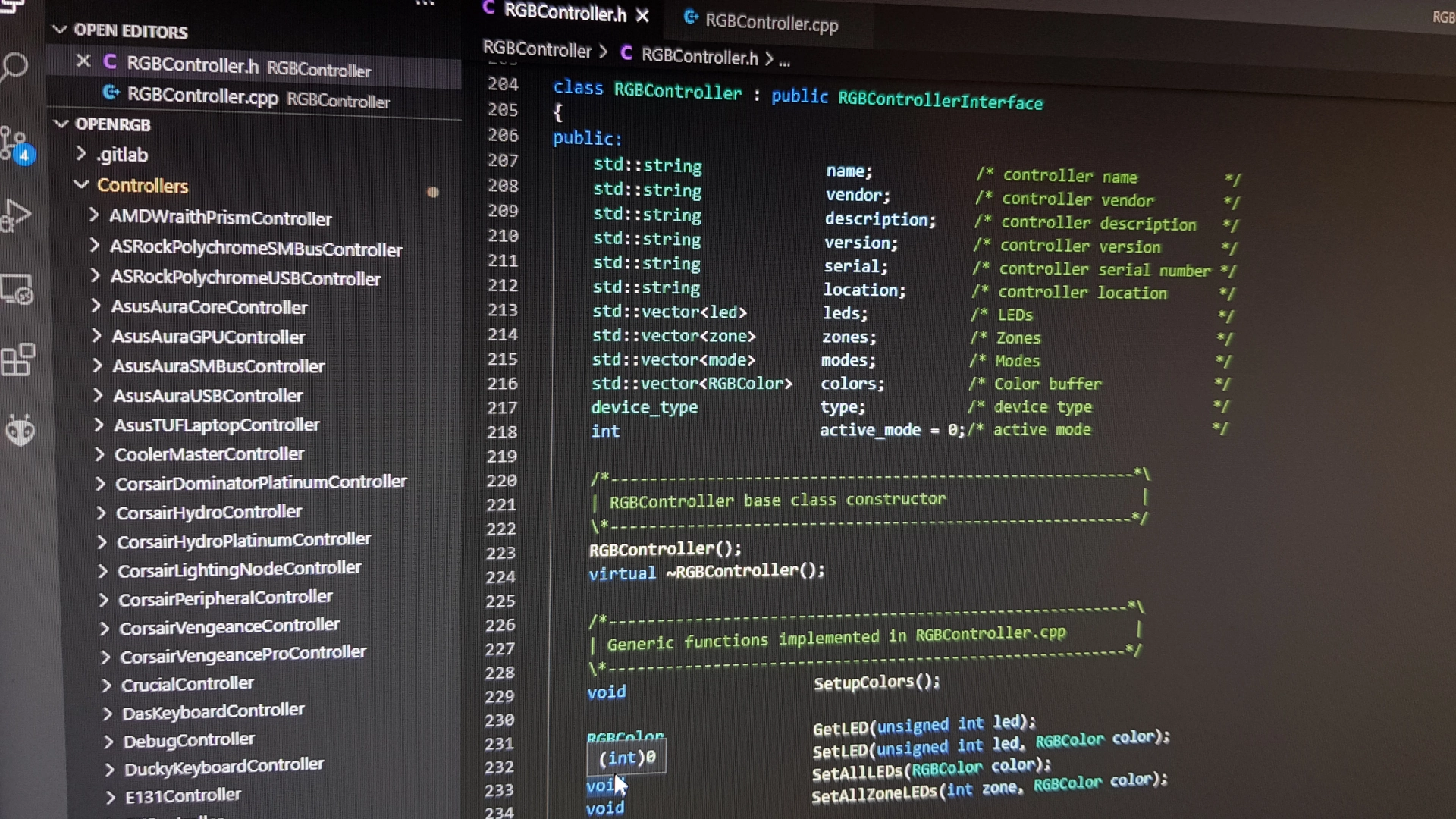
OpenRGB is free and open source software under the GNU General Public License version 2. This means anyone is free to view and modify the code. If you know C++, you can add your own device with our flexible RGB hardware abstraction layer. Being open source means more devices are constantly being added!


Check out the source code on GitLab
OpenRGB is Cross-Platform

Control RGB on Windows, Linux, and MacOS

Cross-Platform

OpenRGB runs on Windows, Linux and MacOS. No longer is RGB control a Windows-exclusive feature! OpenRGB has been tested on X86, X86_64, ARM32, and ARM64 processors including ARM mini-PCs such as the Raspberry Pi.

Part 21 Work: Actress Ruks Khandagale And Shakespeare

For the uninitiated, the question lingers: What exactly is "Part 21"? Is it the 21st production in a series? The 21st character study? Or a metaphorical 21st chapter in a personal dialogue with the Elizabethan playwright?

In an exclusive deep dive, we unravel how are not merely revisiting the classics; they are deconstructing them, breathing contemporary urgency into iambic pentameter, and redefining what it means to be a female performer in Shakespeare’s male-dominated cosmos. The Genesis: Why Shakespeare? Why Part 21? To understand the magnitude of Part 21 , one must first understand Khandagale’s artistic philosophy. Trained at the National School of Drama (NSD) and further refined in the experimental houses of Berlin and London, Khandagale has always viewed Shakespeare as a "living, bleeding text." actress ruks khandagale and shakespeare part 21 work

For the aspiring actor, the seasoned critic, or the curious soul who has never seen a play: find this work. Sit through the 210 minutes. Plant your seed. Because by the 21st sonnet, you will realize—Ruks Khandagale isn’t performing Shakespeare. She is arguing with him. And in that argument, art is reborn. Stay tuned for our exclusive video interview: "21 Questions with Ruks Khandagale on Shakespeare, Silence, and the 21st Breath." For the uninitiated, the question lingers: What exactly

To date, over 2,100 pots of basil, mint, and marigold have been planted across three continents. One attendee in Edinburgh wrote in the guestbook: “I came for Shakespeare. I left with a garden and a new understanding of grief.” As of late 2025, actress Ruks Khandagale has hinted that Part 21 Work is cyclical, not terminal. In a cryptic Instagram post featuring the number 21 in Roman numerals (XXI), she captioned: “We stop at 21 because that is the age of adulthood. Now, we raise the child.” Or a metaphorical 21st chapter in a personal