Every feature. All in one platform.
Purpose-Built Accounting
Get the guided workflows and automations made for property management that non-accountants want with the depth pros demand.
- Automatic bank reconciliation
- 1099 e-filing in minutes
- Property-specific financial reporting
View Accounting Features
Rent Collection
Automate payments for your residents, owners, and vendors while opening up new revenue streams inside your portfolio.
- Convenient online rent and bill payments via ACH and credit card
- Funds automatically transferred to your bank account
- Optional transaction fees cover your costs or generate extra revenue
View Payments Features
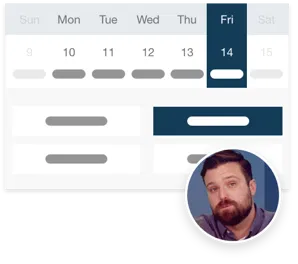
Listing + Leasing
Offer online leasing that fills vacancies fast and delights incoming residents.
- One-touch syndication to market your listings across top rental sites
- Seamless online rental applications with built-in tenant screening services
- 100% digital, paper-free leasing process
View Leasing Features
Maintenance + Operations
Find efficiencies with every work order plus dig into analytics that back up smarter vendor management. Flash Player 5.0 R30
- 24/7 status tracking from anywhere
- Recurring tasks scheduling
- Integrated bill and invoice management
View Maintenance Features
The Best Property Management Apps
Serve up the smoothest experience with top-rated mobile apps that put your communication on point with residents and owners.
- Highly rated property manager and Resident Center apps
- On-the-go connectivity for faster response times
- Self-service options that reduce calls and emails
View Features
Industry-Leading Integrations
Centralize and build out your tech stack through an ecosystem of leading integrations in Buildium Marketplace.
- Proven apps from leading proptech partners
- No monthly subscriptions (pay as you go)
- Links right into your Buildium account
Discover Marketplace
Made for mixed portfolios
Flash Player 5.0 R30 May 2026
Because represents the peak of "restrained creativity." This was before ActionScript 2.0 (Flash 7) introduced class hierarchies that confused artists, and before ActionScript 3.0 (Flash 9) turned Flash into a full enterprise IDE. R30 was pure, simple, speedy.
R30 introduced a caching mechanism for vector math. While not as advanced as GPU acceleration (that came a decade later), this build could render approximately 15-20% more vectors per frame than its predecessor. For creators of the infamous "Flash intro" pages—those unskippable, music-blasting animations that every corporate website used—this meant smoother frame rates on slower dial-up connections. Modern web users take security sandboxes for granted. In the Flash Player 5.0 R30 era, the concept was nascent. This version enforced the same-origin policy strictly for loadVariables() and loadMovie() for the first time. Earlier builds had a loophole allowing cross-domain data fetching, which was a massive security hole. R30 closed several of those backdoors.
However, it was not airtight. R30 was famously the version exploited by early "Flash cookies" (Local Shared Objects didn't officially exist until Flash 6, but R30 had a benign proto-version that hackers later leveraged). Despite this, for its time, R30 was considered a security fortress. For web developers in 2001, the mantra was: "Target Flash 4, build in Flash 5, and test on Player 5.0 R30." Why? Because the major content delivery networks (CDNs) of the era—like AtomFilms and Newgrounds—ran their player detection scripts specifically against the R30 build.
However, early builds of Flash 5 Player were notoriously buggy. Memory leaks were common. ActionScript’s onClipEvent handlers would sometimes fire erratically. This prompted Macromedia to roll out a series of "R" (Release) updates. was the most stable of these pre-6.0 releases. What Exactly is Flash Player 5.0 R30? From a technical standpoint, Flash Player 5.0 R30 is a specific binary revision of the player plugin. Unlike modern browsers that auto-update silently, users in 2000 had to manually download new versions from Macromedia’s website.
While you cannot safely run R30 on your work laptop today, you can honor its legacy by exploring the web’s history. The soul of early interactive design lives on in that single, tiny .dll file—Build 5.0.30.0. The build that just worked. Have a vintage computer running Windows 2000? Dust it off and see if you have Flash Player 5.0 R30 installed. You might be sitting on a piece of digital history.
Enter Flash 5. This version introduced a revolutionary concept to the masses: . For the first time, designers (not just hardcore programmers) could script interactivity, create dynamic form validation, preloaders, and even rudimentary multiplayer games.
95% Customer Support Satisfaction Rating
Success is our
middle name (literally)
Our Customer Success Team has spent years perfecting our renowned customer service model. From the moment you begin onboarding, your business is our sole focus.
- Reliable, live phone support in minutes (not hours)
- 85% of customer support calls are resolved on the first call
- 34% increase in support agent staffing since 2024
Customer CareOnboarding

Need an app? Add it in a snap.
Buildium Marketplace gives you on-demand access to the latest property management tools and platform integrations – from a growing roster of leading proptech partners.
Select Buildium Marketplace integrations:
Because represents the peak of "restrained creativity." This was before ActionScript 2.0 (Flash 7) introduced class hierarchies that confused artists, and before ActionScript 3.0 (Flash 9) turned Flash into a full enterprise IDE. R30 was pure, simple, speedy.
R30 introduced a caching mechanism for vector math. While not as advanced as GPU acceleration (that came a decade later), this build could render approximately 15-20% more vectors per frame than its predecessor. For creators of the infamous "Flash intro" pages—those unskippable, music-blasting animations that every corporate website used—this meant smoother frame rates on slower dial-up connections. Modern web users take security sandboxes for granted. In the Flash Player 5.0 R30 era, the concept was nascent. This version enforced the same-origin policy strictly for loadVariables() and loadMovie() for the first time. Earlier builds had a loophole allowing cross-domain data fetching, which was a massive security hole. R30 closed several of those backdoors.
However, it was not airtight. R30 was famously the version exploited by early "Flash cookies" (Local Shared Objects didn't officially exist until Flash 6, but R30 had a benign proto-version that hackers later leveraged). Despite this, for its time, R30 was considered a security fortress. For web developers in 2001, the mantra was: "Target Flash 4, build in Flash 5, and test on Player 5.0 R30." Why? Because the major content delivery networks (CDNs) of the era—like AtomFilms and Newgrounds—ran their player detection scripts specifically against the R30 build.
However, early builds of Flash 5 Player were notoriously buggy. Memory leaks were common. ActionScript’s onClipEvent handlers would sometimes fire erratically. This prompted Macromedia to roll out a series of "R" (Release) updates. was the most stable of these pre-6.0 releases. What Exactly is Flash Player 5.0 R30? From a technical standpoint, Flash Player 5.0 R30 is a specific binary revision of the player plugin. Unlike modern browsers that auto-update silently, users in 2000 had to manually download new versions from Macromedia’s website.
While you cannot safely run R30 on your work laptop today, you can honor its legacy by exploring the web’s history. The soul of early interactive design lives on in that single, tiny .dll file—Build 5.0.30.0. The build that just worked. Have a vintage computer running Windows 2000? Dust it off and see if you have Flash Player 5.0 R30 installed. You might be sitting on a piece of digital history.
Enter Flash 5. This version introduced a revolutionary concept to the masses: . For the first time, designers (not just hardcore programmers) could script interactivity, create dynamic form validation, preloaders, and even rudimentary multiplayer games.